


blog
Advanced non-destructive testing (NDT) methods in steel quality control

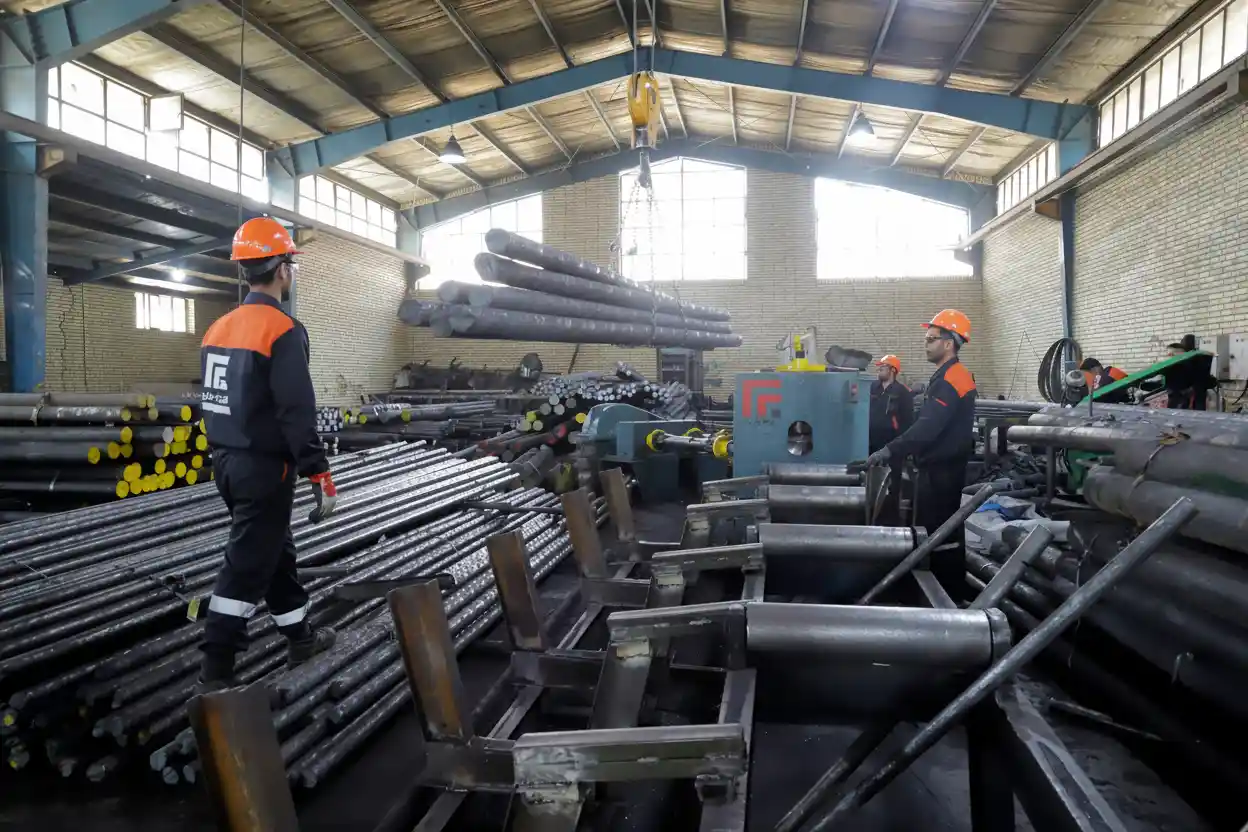
Non-destructive testing (NDT) refers to a set of analytical methods used to evaluate the properties of materials, parts, and structures without causing damage or permanent change to them. In the steel industry, these methods play a vital role in ensuring product quality, increasing safety, and reducing maintenance costs. By utilizing advanced NDT techniques, hidden defects can be identified in the early stages of production and catastrophic failures can be prevented during operation.
Principles and Philosophy of Non-Destructive Testing
Non-destructive testing is based on various physical principles, each of which is used to identify specific types of defects. These methods allow for detailed examination of parts without destroying them, which is especially important for finished products and sensitive parts. In steel production plants, non-destructive testing is used in various stages of production, including casting, rolling, welding, and machining.
Common Non-Destructive Testing Methods in the Steel Industry
Ultrasonic Testing (UT)
Ultrasonic testing uses high-frequency sound waves (usually between 0.1 and 25 MHz) to detect internal defects. In this method, a probe sends ultrasonic waves into the part and receives the waves reflected from the surfaces and internal defects. This technique is able to detect cracks, holes, inclusions and other internal discontinuities with high mechanical accuracy. Ultrasonic testing is used to examine steel ingots, rolled parts and welded joints.
Magnetic Particle Testing (MT)
This method is used to detect surface and subsurface defects in ferromagnetic materials such as steel. In this technique, the part in question is magnetized and tiny magnetic particles are spread over its surface. At the location of the defects, the magnetic field leaks and magnetic particles accumulate in these areas, which is an indication of the presence of a defect. Magnetic particle testing is very effective for detecting surface cracks, porosity and lack of fusion in welds.
Liquid Penetrant Testing (PT)
Liquid Penetrant Testing is one of the simplest and most widely used non-destructive testing methods for detecting open surface defects. In this method, a penetrant liquid with high wettability is applied to the surface of the part and time is given to penetrate into the surface defects. After wiping off the excess liquid, a developer is sprayed on the surface, which draws the penetrant liquid trapped in the defects to the surface and creates visible signs. This method is used to detect fine cracks, surface holes and other discontinuities on the surface of the steel.
Industrial Radiographic Testing (RT)
Radiographic testing uses X-rays or gamma rays to create an image of the internal structure of the parts. These rays pass through the part and are attenuated based on the density and thickness of the material. The image created on film or a digital detector represents the internal structure of the part and shows defects such as holes, inclusions and cracks. This method is very suitable for examining thick section welds and castings.
Eddy Current Testing (ET)
Eddy current testing works on the basis of electromagnetic induction. In this method, an alternating current-carrying coil is placed near the surface of the part and induces eddy currents in the material. Changes in the electromagnetic properties of the material such as electrical conductivity and magnetic permeability affect these eddy currents and provide information about surface and subsurface defects.
Advanced Applications in the Steel Industry
Today, more advanced methods such as phased array ultrasonic testing (PAUT), time-of-flight diffraction (TOFD) and computed radiography (CR) are used in the steel industry. These techniques allow for faster scanning, higher accuracy and the ability to store results digitally. Especially in the examination of critical welds and pressure-bearing parts, these advanced methods have set a new standard in quality control.
Conclusion
By intelligently combining various non-destructive testing methods and applying advanced techniques, a confidence level of 99.9% in steel quality can be achieved. Continuous development of these methods and training of expert personnel will ensure the production of superior quality steel products in accordance with international standards. Investment in non-destructive testing is not only a cost, but also an investment in improving the safety, reliability and brand reputation of the steel manufacturer.